2026 Best Ergonomic Stool vs Traditional Stool Which Wins?

Time:2026-09-26 Author:Amelia
0%

Choosing a seat for a workday can change how your back, hips, and legs feel by late afternoon. The right choice depends on your body, desk height, and daily tasks. This guide compares ergonomic stool vs traditional stool, focusing on practical features rather than promises of perfect posture.

An ergonomic stool may offer adjustable height, a shaped seat, a foot ring, or room to shift position. Those details matter when your feet need support or your work surface sits higher than a standard desk. A traditional stool is often simpler, lighter, and easier to move between rooms. It may suit short tasks, but a fixed seat can feel less forgiving during longer sessions. Small differences count.

We’ll look at comfort, adjustability, stability, materials, price, and the space each stool needs. Instead of assuming one design works for everyone, we’ll consider how seat height, leg support, and movement fit different users and work routines. A useful comparison should also acknowledge limits: an ergonomic label alone cannot guarantee comfort, and even a basic stool may feel right for some people. That part is personal. By weighing everyday details against your needs, you can make a more informed choice for 2026.
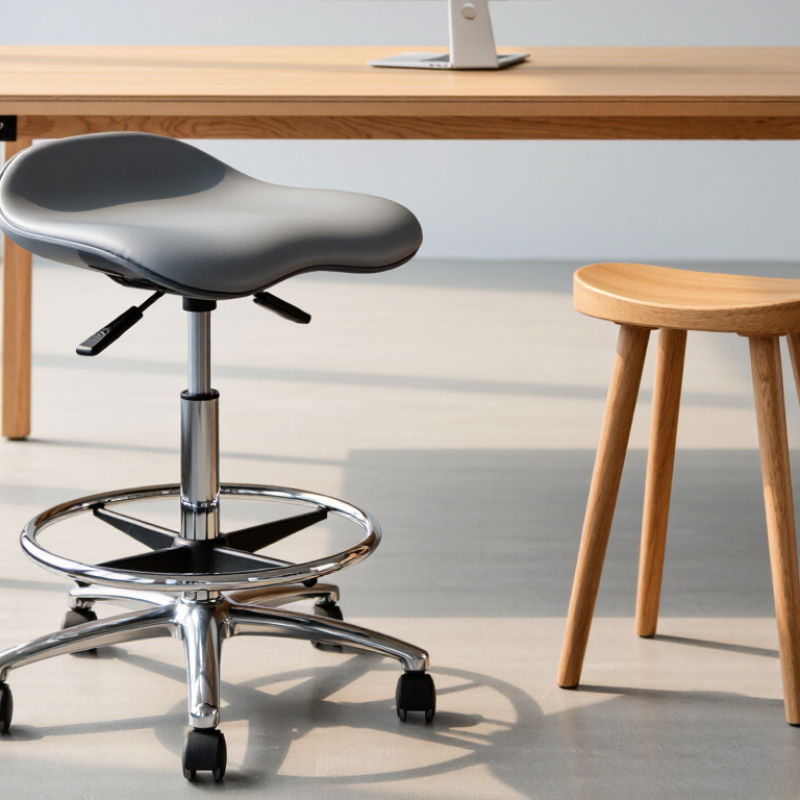
2026 Best Ergonomic Stool vs Traditional Stool Which Wins?

What Defines an Ergonomic Stool and a Traditional Stool in 2026?

In 2026, an ergonomic stool is defined less by a trendy shape than by how well it suits a person’s task and posture. It may offer adjustable height, a pressure-distributing seat, a stable base, and foot support when needed. Some stools allow gentle movement, but it should feel controlled, not wobbly. A useful fit lets feet rest securely and keeps hips roughly level with, or slightly above, the knees. Try it at the actual counter or desk. Small mismatches matter.

A traditional stool is usually simpler: a fixed-height seat, often with a flat top and little or no adjustment. It can work well for brief meals, workshops, or shared spaces, especially when its height matches the surface. No adjustment. That is the trade-off. Seat depth, edge shape, materials, and stability still affect comfort, so “traditional” does not automatically mean uncomfortable, and “ergonomic” does not guarantee a good fit. Check whether you can sit without pressure behind your knees, reach the work comfortably, and keep the stool steady on your floor. Labels tell only part of the story.

How Their Designs Support Different Sitting Positions

An ergonomic stool changes the angle of sitting. Many designs tilt the pelvis slightly forward, opening the hips and letting the trunk balance over the feet. A traditional flat stool usually keeps the hips and knees near right angles. Its wider, level seat can feel steadier during meals, drawing, or short desk tasks. But with no backrest, slouching can creep in. It happens quietly.

The EU-OSHA report Work-related Musculoskeletal Disorders: Prevalence, Costs and Demographics in the EU notes that about three in five EU workers report musculoskeletal complaints. That figure does not prove one seat prevents pain; it shows why posture options matter. OSHA workstation guidance also emphasizes adjustable seating, supported feet, and a neutral working posture.

A height-adjustable ergonomic stool can help a user shift between upright sitting and a forward-leaning task, such as sketching at a counter. A traditional stool may suit brief, relaxed sitting, especially when the feet rest firmly on a rung or floor.

Try both positions. Notice pressure under the thighs, balance, and whether the lower back tires.

One honest limitation: active sitting can feel unstable at first, and it is not comfortable for everyone. A stool is only useful when its height matches the work surface and the sitter’s body.

How Comfort, Posture, and Movement Compare During Use

An ergonomic stool and a traditional stool can feel quite different after an hour at a desk. An ergonomic design may offer a shaped seat, adjustable height, or a foot ring. These features can help you shift position and keep your feet supported. A traditional stool is usually simpler, with a flat seat and fewer adjustments. It can work well for short tasks, but a seat that is too high may press against your thighs. Small details matter.

Neither stool guarantees comfortable posture. An adjustable design can make it easier to find a workable position, but you still need to move. A fixed stool may encourage you to stand sooner, which can be useful during a long work session. A moving or tilting seat is not automatically better; it may distract you or feel unstable. Fit depends on your body, desk height, task, and sitting time. There is no perfect choice for everyone.

Tips: Adjust the seat so your feet rest securely, and leave room behind your knees. Try each stool for a short work session before deciding. Notice where pressure builds. Then adjust or take a standing break.

Which Stool Fits Different Tasks and Work Environments

A stool that works at a drafting table may feel awkward at a kitchen counter.
The right choice depends on task length, reach, and how often you change position. An ergonomic stool often offers adjustable height, a shaped seat, or a foot ring. These features can help when you switch between sitting and standing during detailed work. Small details matter.

For sewing, model-making, or bench work, stable support and easy movement may be more useful than a thick cushion. A traditional stool can suit brief tasks, shared spaces, or rooms where simple storage matters. If you spend hours seated, check whether your feet rest securely and your knees have room. A stool that is too high can leave your legs dangling, even if its seat feels comfortable at first.

In a studio or workshop, consider floor surfaces, tools, and how far you need to reach. Casters can help on clear, smooth floors, but may roll unexpectedly near uneven surfaces or loose materials. A fixed stool may feel steadier, though less convenient to reposition. No design fits every body or job. Try adjusting the seat while doing the actual task, not just while sitting still; that test is easy to overlook.

What to Consider When Comparing Cost, Adjustability, and Durability

An ergonomic stool usually costs more because height adjustment, a foot ring, and a tilting seat add parts that can wear. A traditional stool may suit a fixed-height counter, but check whether your feet rest flat or need support. Small detail. For a fair comparison, price replacement parts and delivery, not just the checkout total. For example, a $240 adjustable stool lasting six years costs $40 per year; a $90 fixed stool replaced every two years costs $45. Those lifespans are assumptions, not guarantees.

Adjustability matters most when people share a workstation or switch tasks. Measure the counter height, then check the seat range and foot support against the users’ needs. More controls are not automatically better; unused adjustments still add cost and potential maintenance. The 2024 Liberty Mutual Workplace Safety Index estimated that disabling workplace injuries cost U.S. employers $58.78 billion in 2022. That figure covers many injury types; it does not show that stools cause, or prevent, those costs.

For durability, inspect the base, welds, fasteners, upholstery seams, and replacement-part availability. Ask whether the seller provides documented load and cycle testing, and read warranty exclusions closely. A warranty is useful, but it is not a durability test. In a quiet showroom, both seats may feel sturdy. Daily swiveling, leaning, and repeated height changes reveal more. I would compare the total cost over a realistic service life, then admit that estimating that life is the messy part.

FAQS

What makes a stool ergonomic?

It should suit your task and body, not just look unusual. Adjustable height, a stable base, and foot support can help. Small mismatches matter.

How does a traditional stool differ?

It usually has a fixed-height, level seat with little or no adjustment. That simplicity can suit short meals or shared spaces. No adjustment.

How can I check whether a stool fits?

Try it at your actual desk or counter. Keep your feet supported, hips roughly level with or above your knees, and avoid pressure behind the knees.

Are ergonomic stools always more comfortable?

No. A shaped seat or adjustable height may help, but comfort depends on your body and work surface. Labels tell only part of the story.

Which stool works for detailed tasks?

An adjustable stool may help when switching between sitting and standing. For sewing or bench work, steady support and easy movement may matter more than thick padding.

Is a traditional stool suitable for long sessions?

It can be, but check your leg support and knee room. A stool that is too high may leave your feet dangling. That gets tiring.

Are moving stools a good choice for workshops?

Casters can help on clear, smooth floors. Near uneven flooring or loose materials, they may roll unexpectedly. A fixed stool may feel steadier, though less convenient.

Does an active sitting position suit everyone?

Not necessarily. It may feel unstable at first, and some people may not enjoy it. The advice sounds neat; real bodies and rooms are messier.

Conclusion

In 2026, the choice between an ergonomic stool and a traditional stool depends on how and where it will be used. Ergonomic stools typically offer adjustable height, shaped seats, or features that encourage small shifts in posture, while traditional stools favor a simpler, often fixed design. These differences affect how each stool supports upright sitting, leaning, and movement throughout the day. An ergonomic design may suit tasks that require extended sitting or frequent changes in position, whereas a traditional stool can be a practical fit for brief use, compact spaces, or straightforward workstations.

When comparing ergonomic stool vs traditional stool options, consider comfort, posture support, adjustability, durability, and total cost rather than appearance alone. The best choice is the one that fits the user’s body, the height of the work surface, and the demands of the environment. Trying a stool, when possible, can help reveal whether its support and movement feel comfortable over time.

Amelia

Amelia

Amelia is a seasoned marketing professional with a wealth of expertise in our company’s core offerings. With an unwavering passion for driving growth and innovation, she plays a pivotal role in shaping our marketing strategies and enhancing brand visibility. A key aspect of her responsibilities......