Choosing between a fixed dental chair and a portable dental unit is not a simple equipment purchase. It affects infection control, ergonomics, treatment speed, patient comfort, and long-term operating costs. This China-focused guide examines the dental chair vs portable dental unit debate through practical clinic conditions, not catalogue promises.
The World Health Organization reported in its Global Oral Health Status Report 2022 that nearly 3.5 billion people live with oral diseases worldwide. That scale increases demand for flexible dental services. Grand View Research also identifies continuing growth in the global dental equipment market, driven by digital workflows, private clinics, and expanding access to care. However, market reports measure sales differently. Their numbers should guide decisions, not replace clinical judgment.
Dr. Gordon J. Christensen, a respected prosthodontist and dental educator, has repeatedly emphasized, “The best dentistry is the dentistry that lasts the longest and costs the least.” His principle fits this comparison well. A fixed chair may offer stronger stability, integrated delivery systems, and better daily ergonomics. A portable unit may reach schools, rural communities, nursing facilities, or temporary treatment rooms. It can also reduce installation demands.
The details matter. A portable compressor may sound louder in a small room. A fixed chair may consume valuable floor space. Neither option wins everywhere. This article compares China’s leading dental chair and portable dental unit choices across mobility, suction, water supply, maintenance, operator posture, and return on investment. Some conclusions remain uncomfortable. The cheapest unit can become expensive when downtime, repairs, and staff fatigue enter the calculation.
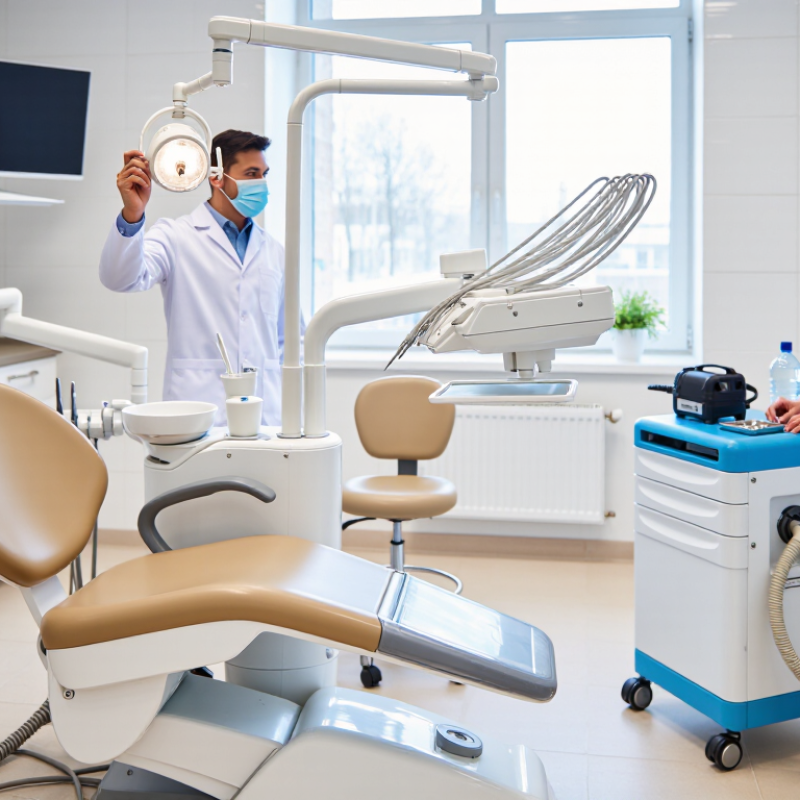
China-made dental chairs and portable dental units serve different clinical realities. A dental chair usually combines an adjustable backrest, hydraulic lift, delivery tray, operating light, foot control, and water system. It suits fixed clinics that need stable positioning and repeated daily use. Portable units are lighter and often include a compressor, suction bottle, handpiece connections, and a foldable case. They support mobile visits, outreach work, and treatment in rooms without permanent plumbing.
In practical evaluations, chair stability affects precision during long procedures. Portable equipment saves space, but its smaller water and waste containers need frequent attention. Noise, battery life, hose length, and cleaning access also influence the operator’s experience.
Manufacturing quality can vary, even within the same product category. Buyers should review test records, material details, warranty terms, replacement parts, and relevant quality certifications. A low purchase price may hide higher maintenance costs. I would not call either option universally superior. That judgment depends on workflow, patient volume, room design, and transport needs.
Tips: Ask for a live demonstration before ordering. Check whether the chair moves smoothly under load. Test the portable unit’s suction with water and air. Inspect seals, connectors, and foot controls closely. Confirm voltage compatibility and training support. Do not overlook sterilization procedures; a convenient device can still create difficult cleaning points. Even experienced buyers sometimes focus on appearance first, which is an avoidable mistake.
Comparing China’s top 10 dental chair options with portable dental units starts with structure, not appearance. A dental chair creates a stable treatment platform for patients and clinicians. Its backrest, headrest, arm supports, and height controls coordinate during examinations. The integrated delivery system can hold handpieces, a three-way syringe, suction, and an operating light. That stability matters.
A portable dental unit follows a different design philosophy. It usually combines a compact control box, foot pedal, water bottle, suction module, and adjustable hoses. Some models connect to an external compressor or use a separate mobile chair. This arrangement reduces installation demands and supports outreach care, temporary rooms, and training environments. However, portable equipment may offer less workspace and weaker suction under demanding procedures. Setup time also depends on power, water, drainage, and surface conditions.
Core functions reveal the practical gap. Fixed chairs support smoother four-handed dentistry because instruments stay organized around the patient. Portable units favor mobility and quick deployment. Their lighter frames can help in narrow spaces, but repeated movement may loosen connections if maintenance is neglected. Cleaning is another concern; detachable tubing can simplify access, yet every connector needs careful disinfection. The comparison is not perfectly fair. A portable unit may win for access, while a fixed chair usually wins for workflow depth and long-session comfort. One detail is easy to underestimate: staff training often determines performance more than equipment specifications.
China Top 10 Dental Chair vs Portable Dental Unit: Which Wins?
Clinical performance depends on more than equipment size. A dental chair usually provides stable positioning, integrated suction, foot controls, lighting, and water delivery. This supports longer procedures and reduces repeated adjustments. A portable dental unit offers mobility, faster setup, and access to small clinics, outreach rooms, and temporary treatment spaces. However, its smaller compressor and water tank may limit continuous procedures. Check airflow, suction strength, noise, chair stability, and instrument compatibility before comparing prices. A low purchase cost can become expensive when maintenance is frequent.
Usability also depends on the operator’s daily routine. In clinical use, staff should measure setup time, cleaning effort, cable management, and emergency access. A portable unit may fit into a compact case, but carrying it between rooms can strain the back. A fixed chair saves movement but requires dedicated space and reliable installation. Safety features matter, including stable casters, sealed surfaces, pressure controls, and clear operating instructions. Performance claims should be verified through technical documents, service records, and hands-on testing. Marketing language is not evidence.
Tips: Test both systems with a simulated patient and common instruments. Record procedure time, suction recovery, noise, and cleaning steps. Ask whether replacement parts are available locally. Do not ignore the operator’s posture. A convenient device may still create fatigue after several hours. The portable option may win for flexibility, while the dental chair often performs better for sustained clinical work. The right choice can change with the procedure, room, staff, and maintenance capacity.
| Factor | Fixed Dental Chair | Portable Dental Unit | Clinical Performance and Usability Impact | Typical Advantage |
|---|---|---|---|---|
| 1. Patient positioning | Motorized backrest and seat movement; commonly supports supine positioning and adjustable headrest. | Usually used with a standard chair, recliner, or treatment table; positioning depends on the furniture available. | Stable positioning improves access, operator posture, visibility, and patient comfort during longer procedures. | Fixed chair |
| 2. Handpiece capacity | Common configurations support approximately 2–5 handpiece positions, depending on the delivery system. | Commonly supports 1–3 handpieces; exact capacity depends on the compressor, tubing, and control module. | More positions reduce instrument changes and support multi-step restorative, endodontic, and surgical workflows. | Fixed chair |
| 3. Air and water delivery | Normally connected to a dedicated compressor, water supply, drainage system, and dental suction system. | Often uses an integrated or separate oil-free compressor, clean-water bottle, and waste-water container. | Fixed utilities generally provide greater continuity for high-volume treatment; portable systems support independent operation where utilities are unavailable. | Depends on setting |
| 4. Suction performance | Can be connected to a central high-volume evacuator and low-volume saliva ejector. | May provide low-volume suction or a compact suction pump; high-volume evacuation may require an additional device. | Effective evacuation improves moisture control, visibility, aerosol management, and patient comfort. | Fixed chair |
| 5. Mobility and setup | Normally remains installed in one operatory; relocation can require utility disconnection and professional installation. | Many units weigh approximately 15–35 kg, excluding optional accessories, and can be moved between rooms or sites. | Portable equipment is useful for outreach, temporary clinics, education, home visits, and emergency backup. | Portable unit |
| 6. Installation requirements | Usually requires electrical power, compressed air, water, drainage, and sometimes building-level suction or plumbing work. | Usually requires a suitable electrical outlet and space for clean-water and waste containers; utility requirements are lower. | Lower infrastructure demand shortens deployment time and reduces site-preparation cost. | Portable unit |
| 7. Infection-control workflow | Supports integrated flushing, waterline maintenance, instrument holders, cuspidor cleaning, and organized surface disinfection. | Simpler water and waste circuits can be easier to isolate, drain, and transport, but containers and tubing require strict manual maintenance. | Infection-control performance depends more on validated protocols, daily flushing, disinfection, and staff compliance than on equipment format alone. | Depends on protocol |
| 8. Operating noise | Noise depends on the compressor and suction system; dedicated equipment rooms can reduce noise in the operatory. | The integrated compressor is usually closer to the patient and operator, so perceived noise may be more noticeable. | Lower perceived noise can improve communication and reduce anxiety, particularly during pediatric or lengthy treatment. | Fixed chair |
| 9. Procedure suitability | Well suited to routine examinations, restorative treatment, endodontics, periodontal procedures, oral surgery, and high patient turnover. | Well suited to examinations, preventive care, simple restorative procedures, outreach dentistry, and treatment in locations without a complete operatory. | A fixed chair offers broader procedural capability; a portable unit offers greater access and flexibility. | Fixed chair for breadth |
| 10. Total ownership considerations | Higher initial installation and infrastructure cost, with long-term value for a permanent clinic and frequent daily use. | Lower site-preparation cost and easier relocation, but transport, manual cleaning, container handling, and accessory replacement add operational work. | The best choice depends on patient volume, procedure complexity, available utilities, infection-control resources, and the need for mobility. | Depends on business model |
A fixed dental chair usually wins on comfort, stability, and integrated functions. It supports consistent positioning during long procedures. However, installation can require plumbing, electrical work, floor space, and trained technicians. Purchase costs are often higher, while maintenance may involve motors, pumps, upholstery, and electronic controls. The WHO Global Oral Health Status Report 2022 estimates that oral diseases affect nearly 3.5 billion people worldwide. That demand does not make one setup suitable for every clinic. The comparison is not perfectly neat.
A portable dental unit offers mobility, faster room changes, and lower initial infrastructure costs. It can support outreach visits, small clinics, and temporary treatment spaces. Yet transport adds risks. Hoses may kink, water tanks need careful cleaning, and compressed air performance can vary.
CDC infection-prevention guidance stresses safe dental water management and proper instrument sterilization. A portable design is not automatically safer. It needs disciplined workflows. Maintenance may appear simpler, but neglected tubing can create hidden problems. I have seen buyers focus on price and overlook repair access, which is a costly mistake.
Tips: Compare the total five-year cost, not only the quotation. Check warranty response times, replacement-part availability, waterline cleaning procedures, noise levels, and operator training. Use a fixed chair for high-volume clinical rooms. Choose portable equipment when mobility has measurable value. Recheck the decision with real treatment data.
Choosing between China’s top dental chair options and a portable dental unit depends on the practice environment, not just equipment features. A fixed dental chair suits established clinics with stable rooms, water lines, drainage, and reliable electricity. It supports better ergonomics during long procedures. Patients also feel more settled in a dedicated treatment space. However, installation can be costly, and moving the chair later may be difficult.
A portable dental unit fits outreach programs, temporary clinics, teaching sessions, and home-care visits. Its compact design reduces setup time and simplifies transport. Some units include suction, air supply, water storage, and instrument connections. Yet, limited workspace can affect posture and treatment efficiency. Noise, battery life, cleaning access, and storage space require close attention. In practice, portable equipment is flexible, but it is not automatically easier. I have seen teams underestimate setup time, especially when every surface must be disinfected between patients. That detail changes the decision.
Tips: Measure the room, doorway, and storage area before purchasing. Confirm power requirements and suction performance with a qualified technician. Test the unit with real instruments, not only product photographs. Ask who will handle maintenance and spare parts. Review infection-control procedures and local clinical requirements. A fixed chair may be excessive for occasional outreach work, while a portable unit may frustrate a busy clinic. The better choice is the one that matches patient volume, treatment length, staff habits, and available utilities.
Typical clinical footprint required across ten practice environments. A fixed dental chair generally needs more permanent room space and utility clearance, while a portable dental unit can operate in smaller or temporary clinical areas.
Values are indicative planning figures in square metres and may vary according to local regulations, room layout, sterilization workflow, plumbing, electrical requirements, and equipment configuration.
A fixed chair provides a stable platform for examinations and treatment. Its backrest, headrest, arm supports, and height controls work together. A portable unit usually combines a control box, foot pedal, water bottle, suction, and adjustable hoses. It is easier to move. The trade-off is real.
A fixed chair usually offers better comfort and positioning. Patients can remain supported for extended treatments. Clinicians also gain steadier access and improved posture. Portable equipment may use a separate mobile chair. Comfort then depends on that chair’s design and adjustment range.
Portable equipment suits outreach visits, temporary rooms, training sessions, and home-care settings. It can pass through narrow doorways. Setup may require fewer permanent utilities. Still, every visit needs power, water, drainage, and disinfection planning. Mobility alone does not guarantee convenience.
A fixed chair may need plumbing, drainage, electrical work, floor space, and technical installation. Moving it later can be difficult. A portable unit often reduces infrastructure demands. However, it may still need an external compressor, reliable power, or a suitable treatment chair. The floor matters more than expected.
Fixed chairs contain motors, pumps, upholstery, electronic controls, and integrated instruments. Portable units have hoses, connectors, water tanks, suction parts, and control modules. Detachable tubing can simplify cleaning. Neglected connectors can loosen or hide contamination. I would not call portable maintenance simple.
Portable equipment often has lower initial infrastructure costs. Fixed chairs may require more installation spending. Purchase price alone can mislead buyers. Compare repairs, replacement parts, training, cleaning, utilities, and downtime over five years. A cheaper quotation may age badly.
A fixed chair usually supports smoother four-handed dentistry. Instruments remain organized around the patient. Its integrated light, suction, syringe, and handpiece positions can reduce movement. Portable units favor quick deployment instead. Limited workspace may slow treatment. Small spaces expose weaknesses.
Check waterline cleaning, tubing disinfection, instrument sterilization, suction performance, and electrical safety. Confirm that staff understand the cleaning sequence. Portable units need careful tank and hose management after every session. A portable design is not automatically safer. Procedures matter more than appearance.
China-made dental chairs and portable dental units serve different clinical priorities. A dental chair is a fixed, integrated treatment system designed for stability, ergonomic positioning, efficient instrument access, patient comfort, and long-term daily use. In contrast, a portable dental unit is compact, lightweight, and easier to transport, making it suitable for mobile clinics, outreach programs, temporary treatment spaces, and facilities with limited room. The main differences involve structure, delivery systems, suction, water supply, foot controls, lighting, and the level of integration available during treatment.
When comparing dental chair vs portable dental unit, practices should consider clinical workload, mobility, installation, maintenance, safety, and total cost of ownership. Fixed chairs generally provide greater operational efficiency, stronger support, and more consistent performance for comprehensive procedures, while portable units offer flexibility, faster setup, and lower space requirements. The best choice depends on the environment: established clinics may benefit from a full dental chair, whereas mobile providers, rural services, educational settings, and emergency teams may prefer a portable solution. Proper training, regular cleaning, stable power, and routine equipment checks are essential for safe and reliable operation.

Derma Medical