Choosing between a dentist stool and an office chair affects comfort, posture, and daily efficiency. The decision becomes clearer when you understand dentist stool vs office chair differences in real working conditions. A dental professional may sit for hours while leaning toward a patient, adjusting instruments, or checking a narrow treatment area. An office worker usually faces a desk and screen with fewer sudden movements. These tasks demand different kinds of support.
A dentist stool often includes a saddle seat, adjustable height, a supportive backrest, and stable casters. Its design can help clinicians stay close to the patient while keeping their feet grounded. An office chair usually offers broader cushioning, armrests, tilt control, and stronger support for longer desk sessions. However, a soft seat is not automatically better. I learned that comfort can hide poor posture during extended work.
Reliable selection requires more than comparing appearance or price. Consider seat height, lumbar support, mobility, upholstery, weight capacity, and cleaning needs. A dental clinic may require smooth, wipeable surfaces and dependable movement around equipment. A home office may prioritize adjustable armrests and breathable fabric instead. Ergonomic guidance from occupational health professionals can support this evaluation, but individual fit still matters. Sit on the chair for several minutes. Notice pressure under your thighs. Check whether your shoulders remain relaxed.
There is no universal winner. The right choice depends on movement, workspace design, body proportions, and working habits. This guide examines practical differences, common mistakes, and thoughtful ways to test each option before purchasing.
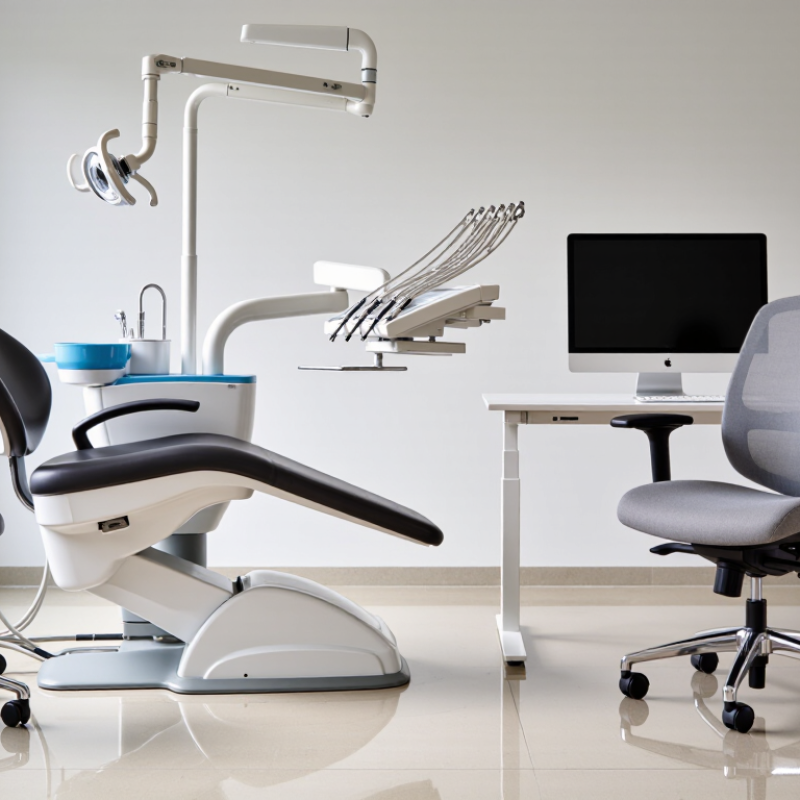
The right seat depends on the work performed, not its appearance. A dentist stool supports close treatment around the patient’s mouth. Its adjustable height allows the clinician to keep elbows near the body. A saddle-style seat may also improve movement during long procedures. However, it can feel unstable when frequent paperwork interrupts treatment.
An office chair suits administrative tasks, consultations, and digital charting. Its backrest offers support during extended sitting. Armrests can help during typing, but they may obstruct movement beside the dental unit. Observe the actual workflow: reaching for instruments, turning toward a screen, or standing repeatedly. These small actions often reveal more than a product description. A poorly adjusted seat can still cause shoulder tension, even when it feels comfortable at first.
Tips: Match the chair to the dominant task. Test the seat with clinical footwear. Check whether your feet rest firmly on the floor. Adjust height until your eyes align naturally with the treatment area. Cleanable surfaces matter in clinical rooms. A subtle gap or textured seam can collect debris. Also, reassess the choice after several working days. Initial comfort can be misleading. A stool may encourage better mobility, yet some clinicians need stronger back support. The best decision may change between treatment rooms, because no single seat fits every clinical routine.
Choosing between a dentist stool and an office chair depends on movement, working height, and back support. OSHA ergonomic guidance emphasizes neutral posture, adjustability, and reduced strain rather than one required chair design. During clinical work, a dentist stool allows closer access to the patient and easier foot movement. Its height should let your thighs remain nearly level, with both feet stable on the floor or foot ring. Your elbows should stay near your body, not lifted toward the shoulders.
A stool with a small backrest can support the lower back without blocking movement. However, limited back support may become uncomfortable during long procedures. An office chair usually provides a wider seat, stronger lumbar support, and more stable positioning. That can help during charting, planning, or computer work. Yet a high backrest may interfere with reaching and rotating around a dental unit. The wrong height can also leave your knees cramped or your feet unsupported.
In practice, I would test both chairs for at least several minutes, not just sit briefly. Adjust the seat while wearing normal work shoes. Check whether your pelvis stays balanced and your shoulders remain relaxed. OSHA also encourages arranging tools within easy reach and changing posture regularly. I sometimes favor a stool for precision work, then regret it after extended documentation. A hybrid setup may be more practical. The best choice can change with procedure length, body proportions, and daily workload.
How to Choose Dentist Stool vs Office Chair?
Dental musculoskeletal disorder studies deserve attention. A systematic review by Lietz, Kozak, and Nienhaus in International Archives of Occupational and Environmental Health (2018) found high MSD prevalence among dental professionals. Several reviewed studies reported pain above 60%, especially in the neck, shoulders, and lower back. Some samples exceeded 80%. These figures are not minor discomfort.
A dentist stool usually supports closer access to the patient. Its adjustable height can keep your hips slightly above your knees. A stable base may also encourage neutral spinal movement. An office chair can provide stronger back support, but bulky armrests may block leg movement near the dental unit. The better choice depends on working distance, procedure length, and your body measurements. Not every “ergonomic” chair fits every clinician. I have seen good chairs used badly.
Tips: Test both chairs for at least 20 minutes. Keep feet fully supported. Adjust the seat before adjusting the patient. Your elbows should remain close to your torso, not lifted toward the light. Change posture during long procedures. A 2022 systematic review in Applied Ergonomics also noted that prolonged static positions and repetitive movements remain major occupational risks. Pain is not proof of poor technique alone. Workload, vision, patient position, and recovery time matter too. A chair trial, measured setup, and occupational health assessment can reveal problems that photographs miss.
Review of selected dental musculoskeletal-disorder studies reporting pain or musculoskeletal symptoms above 60%. The findings indicate that prolonged static sitting, forward head posture, trunk rotation, and limited lumbar support may be important factors when selecting a dentist stool or office chair.
Sources: Alexopoulos et al. (2004), Leggat et al. (2007), Hayes et al. (2009), and Kierklo et al. (2011). Prevalence definitions and recall periods varied between studies, so the values should be interpreted as reported estimates rather than a pooled result.
How to Choose Dentist Stool vs Office Chair?
Choosing between a dentist stool and an office chair starts with your body, not the label. Operator height and treatment duration should guide the decision. During a short examination, a supportive office chair may feel adequate. However, lengthy procedures demand finer adjustment. Your feet should rest flat, while your knees remain near a right angle. The seat should support your pelvis without pressing behind the knees. Small details matter. A two-centimeter height change can alter your shoulder position.
For a taller operator, a stool with a broader height range can support a neutral working posture. A shorter operator may need a lower seat and a compact base. Do not assume a foot ring solves everything. It may encourage dangling legs when positioned poorly. Check the lumbar support, seat depth, and backrest movement before purchase. Sit as if treating a patient. Can you reach the working area without lifting your shoulders? Can you turn without twisting your lower back? These practical checks are more reliable than appearance.
Treatment duration changes the balance. For procedures under thirty minutes, easy movement may matter most. For sessions lasting two hours, stable pelvic support becomes essential. A saddle-style stool can help some clinicians, but it is not universally comfortable. Bodies differ. I would test any chair through several simulated appointments, including a long one. My first choice was too firm, and fatigue appeared late. That mistake reminded me to judge comfort after work, not after five minutes.
| Selection Factor | Dentist Stool | Office Chair | Practical Matching Guidance |
|---|---|---|---|
| Primary working posture | Designed for close, forward-facing clinical work with frequent repositioning. | Designed mainly for desk work and a more upright, backward-supported posture. | Choose a dentist stool when the operator must stay close to the patient and move around the treatment area. |
| Typical seat-height range | Approximately 46–66 cm, depending on the model and seat design. | Approximately 40–55 cm for common task-chair configurations. | The correct setting allows both feet to rest firmly on the floor or foot ring, with thighs close to horizontal and knees near 90–110°. |
| Operator height: under 165 cm | Use the lower part of the height range; a compact seat and a low foot ring can improve stability. | Select a chair with a low minimum seat height and a seat depth that does not press behind the knees. | Prioritize a minimum seat height that permits full foot contact without raising the shoulders or leaning forward. |
| Operator height: 165–180 cm | Most standard adjustable stools can provide a suitable working height; verify the upper range for elevated procedures. | Most standard task chairs are suitable when seat height, seat depth, and lumbar support can be adjusted independently. | Use the chair or stool that keeps the elbows close to the body and the shoulders relaxed while viewing the treatment field. |
| Operator height: over 180 cm | Look for a higher maximum seat setting, adequate leg clearance, and a stable five-point base. | Look for a higher seat range and seat depth of roughly 43–50 cm, while maintaining clearance behind the knees. | Do not compensate for insufficient height by bending the neck or raising the shoulders; use a foot ring or adjustable foot support when needed. |
| Seat depth and pelvic support | Often has a smaller or saddle-shaped seat that supports forward-leaning work and permits leg movement. | Usually offers a broader seat with adjustable depth and a contoured backrest. | Leave approximately 2–4 finger widths between the seat edge and the back of the knees. |
| Backrest and lumbar adjustment | May have a narrow, height-adjustable backrest or a pivoting support that allows close access. | Commonly provides broader lumbar support, recline adjustment, and backrest-height adjustment. | For work exceeding 30–60 minutes at a time, choose support that maintains the natural curve of the lower back without restricting movement. |
| Armrests | Often omitted or designed to remain unobtrusive during instrument and patient access. | Frequently includes height-, width-, or pivot-adjustable armrests. | Use armrests only if they support the forearms without contacting the treatment area or forcing the shoulders upward. |
| Recommended treatment duration | Well suited to repeated short or medium procedures, typically 15–60 minutes, with frequent movement. | Better suited to longer seated documentation, consultation, scheduling, or administrative sessions lasting 60 minutes or more. | For long clinical sessions, select the option with the best lumbar support and plan brief posture changes rather than remaining fixed. |
| Mobility around the treatment area | Usually compact, with a five-wheel base and easy lateral movement around the patient. | May be wider and less convenient around dental equipment, especially with fixed armrests. | Check the base width, caster movement, and clearance from hoses, pedals, cabinetry, and the treatment chair. |
| Recommended adjustment checklist | Seat height, seat tilt, backrest height or angle, foot-ring height, and base stability. | Seat height, seat depth, backrest height, lumbar tension, recline resistance, armrest position, and caster stability. | Test the fully adjusted chair or stool for at least 10–15 minutes while simulating the actual working posture. |
| Best overall choice | A height-adjustable dentist stool with a compact base and unobtrusive support. | An adjustable ergonomic office chair with suitable seat depth, lumbar support, and stable mobility. | Match adjustability to operator height first, then select the support and mobility features required by treatment duration and workflow. |
Note: Dimensions are typical ergonomic reference ranges rather than fixed specifications. Final settings should be verified for neutral neck, shoulder, elbow, wrist, hip, and knee positions during actual clinical tasks.
A dentist stool and an office chair serve different working positions. A stool usually supports closer access, frequent movement, and a forward-leaning posture. An office chair often provides deeper seating, a backrest, and longer-duration comfort. Before comparing cushions, inspect every surface that hands may touch. Smooth, sealed upholstery is easier to wipe than deep fabric. Fewer seams help prevent moisture and debris from collecting. Check the underside, levers, casters, and gas-lift cover too. These small areas are often forgotten.
Cleanability depends on material compatibility, not appearance alone. Ask whether the upholstery tolerates the disinfectant used in your practice. Strong chemicals can discolor surfaces, harden coatings, or damage stitching. Request written care instructions. Test a small hidden area first. That step feels slow, but replacement is slower. Avoid designs with exposed foam, open stitching, or narrow dirt traps. A rounded edge and removable, washable accessories can make daily cleaning more consistent. Not every “medical-looking” chair is easy to maintain.
BIFMA safety requirements deserve equal attention. Look for documentation covering stability, caster performance, strength, durability, and backrest testing. A supplier should identify the relevant current BIFMA standard or test method, rather than offering a vague compliance statement. Confirm the chair’s rated load, adjustment range, and base dimensions. A tall stool with a small base may feel unstable during side-reaching. A chair can pass testing and still fit poorly in your room. Measure desk height, operator space, and cleaning clearance before purchasing. Safety paperwork matters, but real movement matters too.
Choose a dentist stool for close treatment around the patient’s mouth. Its adjustable height helps keep your elbows near your body. A saddle-style seat can support easier movement. It may feel unstable during frequent paperwork.
An office chair suits consultations, digital charting, and administrative work. Its backrest supports longer sitting periods. Armrests may help while typing. They can block movement beside the dental unit.
Watch how often you reach, turn, stand, and use instruments. These small movements reveal the better seat. A treatment-heavy routine may favor a stool. A documentation-heavy routine may need an office chair.
Adjust the seat until your eyes align naturally with the treatment area. Keep your feet firmly supported. Your hips may sit slightly higher than your knees. Your elbows should stay close to your torso, not lifted.
Yes. A well-designed chair can still be adjusted poorly. Incorrect height may create shoulder tension or lower-back strain. Comfort during the first hour can be misleading. I have seen good chairs used badly.
Reviews report frequent pain among dental professionals. Several studies found pain prevalence above 60 percent. Some samples exceeded 80 percent. The neck, shoulders, and lower back were common areas.
Test each seat for at least 20 minutes. Use your normal clinical footwear. Try reaching, turning, typing, and standing. A short test helps, but several working days reveal more.
Choose surfaces that are easy to clean. Check seams, gaps, and textured areas carefully. Small crevices can collect debris. A smooth surface is usually easier to maintain.
Not necessarily. Different rooms may require different working distances. Procedure length, patient position, and screen placement also matter. One seat may support treatment but hinder charting. No single choice fits every routine.
Reassess posture, workload, lighting, patient position, and recovery time. Pain is not always caused by the chair alone. Change position during long procedures. An occupational health assessment may reveal hidden problems.
Choosing between a dentist stool and an office chair starts with the clinical task. A dentist stool usually supports close, flexible positioning during examinations and treatment, while an office chair may be more suitable for administrative work, documentation, or longer periods at a desk. Understanding the dentist stool vs office chair differences helps operators select seating that matches their daily workflow. Seat height, lumbar support, and stable posture should also be reviewed in line with OSHA ergonomic guidance, especially because dental musculoskeletal studies have reported pain prevalence above 60%.
Adjustability is essential for matching the user’s height, working posture, and treatment duration. A suitable seat should allow easy changes to height, back support, tilt, and movement without creating pressure points. Before purchasing, verify that surfaces are easy to clean and resistant to routine clinical use. It is also important to review applicable BIFMA safety requirements, including stability, durability, and load performance, so the selected seating supports comfort, hygiene, and reliable operation over time.

Derma Medical