Choosing between an electric and hydraulic dental chair is not a simple price comparison. It affects patient comfort, clinical workflow, maintenance, and long-term operating costs. For clinics comparing China’s top dental chair manufacturers, the decision deserves careful observation rather than quick assumptions.
Dr. Gordon J. Christensen, a respected prosthodontist and dental educator, has expressed a practical equipment principle: “Equipment should serve the dentist, not dictate the procedure.” This idea fits the electric vs hydraulic dental chair debate. Electric models usually provide quieter movement, precise positioning, and programmable settings. A dentist can adjust the backrest and height with a foot control while keeping both hands focused on treatment. Hydraulic chairs may offer strong lifting capacity, simple mechanical construction, and easier servicing in some markets. They can also feel reassuringly solid.
But neither system is perfect. Electric motors may require more specialized diagnosis when faults occur. Hydraulic systems can develop leaks, uneven movement, or pressure loss over time. That small detail matters during a busy afternoon.
A reliable comparison should examine motor quality, pump performance, upholstery durability, emergency lowering, noise levels, warranty coverage, and local technical support. Ask how the chair performs after five years, not only how it looks in a showroom. A clinic with limited maintenance access may value hydraulic simplicity. A high-volume practice may prefer electric precision and smoother positioning.
The best answer depends on treatment style, budget, room layout, and service availability. This guide examines those real-world differences, including uncomfortable trade-offs that product brochures often leave out.
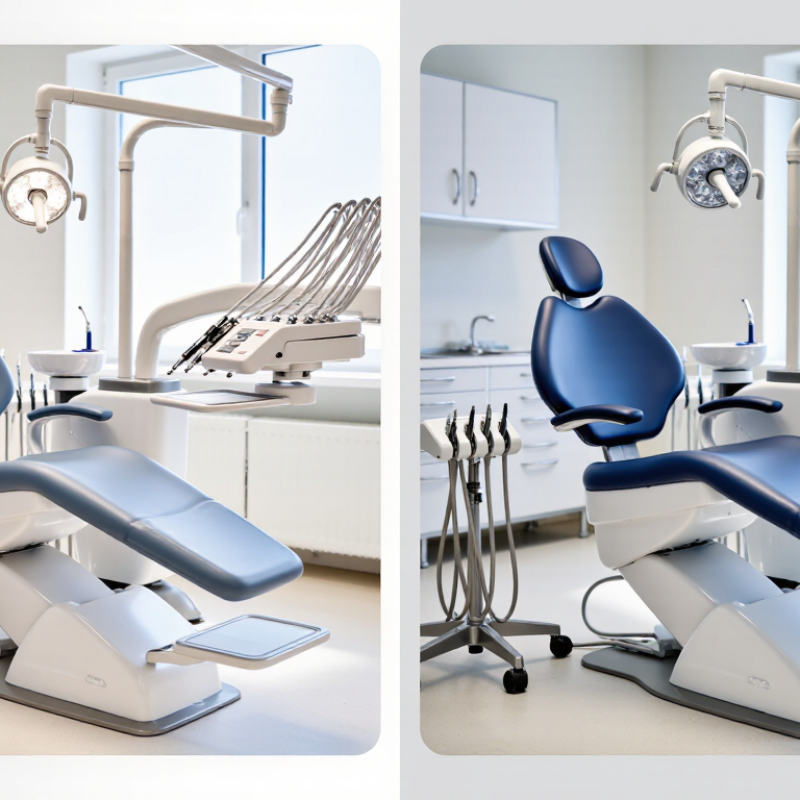
Electric and hydraulic dental chairs use different systems to create controlled movement. An electric chair uses motors, gearboxes, and control circuits. Each motor drives a section, such as the backrest, seat, or leg support. Movement is usually precise and quiet. Preset positions can also improve workflow during examinations and treatment.
A hydraulic chair uses a pump, cylinder, and fluid pressure to lift or lower the patient. Its mechanism is mechanically robust and often handles heavy loads smoothly. However, seals and hoses may require inspection. A small leak can reduce lifting performance. Electric systems can also fail, especially when control boards or motors are exposed to moisture.
The World Health Organization’s Global Oral Health Status Report estimates that nearly 3.5 billion people live with oral diseases. This growing treatment demand makes reliable equipment important. Fortune Business Insights valued the global dental equipment market at about USD 8.7 billion in 2023, showing strong investment in clinical infrastructure. For clinics comparing Chinese-made electric and hydraulic chairs, noise, movement accuracy, service access, and spare-part availability deserve equal attention. Electric models may suit clinics needing frequent repositioning and programmable workflows. Hydraulic models may appeal to practices prioritizing simple lifting power. Not always.
In real clinics, the “better” system depends on maintenance habits, room layout, patient weight range, and technician support. A quieter motor can improve communication, but electronic repairs may be more specialized. Hydraulic chairs may feel dependable, yet worn seals can create gradual instability. The decision deserves testing with a clinician, not only reading a product sheet.
China Top Electric vs Hydraulic Dental Chair: Which Is Better?
In daily clinical use, electric and hydraulic chairs feel different before treatment even begins. Electric systems typically offer precise backrest, height, and leg-rest adjustments. Their motors support quiet movement and programmable positions. This can help clinicians maintain a consistent working posture. Hydraulic chairs often provide strong lifting capacity and smooth vertical movement. However, pump noise and fluid-system maintenance may affect the room experience. Performance depends on load, service quality, and usage frequency, not technology alone.
Control directly affects efficiency. Electric controls may include foot switches, touch panels, or assistant-side buttons. Small adjustments feel more responsive. Hydraulic controls can be reliable, but their movement may feel less precise during repeated positioning. Patient comfort also depends on cushioning, head support, vibration, and movement speed. A quiet electric adjustment may reduce anxiety for sensitive patients. Still, a poorly calibrated electric chair can move abruptly. My initial preference for electric models was too simple. Comfort comes from the complete design, not one mechanism.
Tips: Test both chair types with a clinician and a patient before purchasing. Check the lowest seat height, lifting stability, noise level, emergency return function, and cleaning access. Ask for maintenance records and realistic service response times. A hydraulic chair may suit heavy daily workloads. An electric chair may better support precise workflows. The best choice should match room layout, treatment habits, patient needs, and long-term maintenance resources.
A practical comparison of typical electric and hydraulic dental chair configurations
| Comparison Dimension | Electric Dental Chair | Hydraulic Dental Chair |
|---|---|---|
| Drive Mechanism | Uses electric motors, gear drives, and control circuitry to operate chair movements. | Uses a hydraulic pump, fluid reservoir, valves, and cylinders to generate lifting and positioning force. |
| Movement Precision | Usually higher Motor speed and position can be adjusted in small increments, supporting precise positioning and programmable presets. |
Generally smooth Provides stable movement, although fine positioning depends more on valve design and control quality. |
| Typical Movement Speed | Often offers adjustable movement speed. A complete position change commonly takes several seconds, depending on the motor and load. | Typically delivers moderate, controlled movement. Speed may vary with pump capacity, hydraulic pressure, and patient load. |
| Lifting Capacity | Common clinical designs generally support approximately 135–200 kg, depending on construction and safety rating. | Common clinical designs generally support approximately 150–225 kg, with high load capacity being a traditional strength of hydraulic systems. |
| Positioning Control | Usually supports foot controls, touchpads, wireless remotes, automatic return, and multiple memory positions. | Usually supports foot controls or manual switches; memory positions and advanced digital functions may be less common. |
| Noise During Operation | Low to moderate noise, mainly from the motor and gear assembly. Noise depends on insulation, alignment, and maintenance. | Often produces a noticeable pump sound during movement, particularly during lifting or lowering. |
| Patient Comfort | Smooth acceleration, programmable positions, and synchronized backrest and leg movements can improve comfort during long procedures. | Stable lifting and reclining can provide good comfort, but movement may feel less finely adjustable on basic models. |
| Clinician Ergonomics | Fine height and backrest adjustment can help clinicians maintain a suitable working posture and improve access to the oral cavity. | Offers broad height adjustment, although fewer programmable controls may require more manual operation. |
| Installation Requirements | Generally requires a suitable electrical supply and may need protection against voltage fluctuations and moisture. | Requires electrical power for the pump in most modern designs, plus adequate space for hydraulic components and service access. |
| Maintenance Needs | Requires inspection of motors, wiring, switches, control boards, limit sensors, and mechanical drive components. | Requires inspection of fluid level, hoses, seals, valves, pump performance, and possible hydraulic leaks. |
| Failure Characteristics | A failed motor, control board, sensor, or power supply can stop one or more powered functions until repaired. | Worn seals, fluid leaks, pump failure, or valve problems can reduce lifting performance or cause gradual movement issues. |
| Energy Use | Consumes electricity mainly while a motor is operating; standby consumption depends on the control system. | Consumes electricity when the hydraulic pump operates; the pump may run intermittently to maintain or change position. |
| Best Fit for | Clinics prioritizing precise control, memory functions, low operating noise, digital integration, and ergonomic workflow. | Clinics prioritizing strong lifting performance, proven mechanical design, stable operation, and straightforward controls. |
| Overall Choice | Often preferable for modern, digitally controlled practices where precision, automation, and patient comfort are key priorities. | Often preferable for heavy-duty applications where robust lifting force, stability, and simpler operation are more important. |
Note: Performance ranges are typical industry estimates rather than universal specifications. Actual capacity, noise, speed, control functions, and comfort depend on chair construction, safety certification, maintenance, and clinical configuration.
China Top Electric vs Hydraulic Dental Chair: Which Is Better?
Installation often decides the real cost. An electric chair usually needs power, grounding, compressed air, water, drainage, and control wiring. A hydraulic model may require similar connections, but its pump and oil circuit need extra clearance and inspection access. In a small clinic, technicians may spend one working day leveling and testing either system. The difference is not always dramatic. According to the WHO Global Oral Health Status Report 2022, nearly 3.5 billion people live with oral diseases, increasing pressure on clinics to reduce downtime and improve chair availability.
Maintenance costs become more visible after installation. Electric actuators usually allow precise movement and simpler fault diagnosis, especially when a control panel shows an error. Hydraulic systems can lift heavy loads smoothly, but leaking seals, contaminated oil, or pump noise may stop treatment. The U.S. Bureau of Labor Statistics reports that maintenance and repair occupations remain essential across healthcare facilities, yet it does not publish chair-specific failure rates. That limitation matters. Do not trust a universal “low-maintenance” claim.
Operating costs are usually modest compared with labor, sterilization, and suction equipment. For example, a 0.5-kilowatt chair used 2,000 hours yearly consumes about 1,000 kilowatt-hours. At 0.15 dollars per kilowatt-hour, electricity costs 150 dollars annually. Actual usage varies. Hydraulic energy consumption may be similar, but oil, seals, and pump servicing add uncertainty. ADA Health Policy Institute reports consistently identify staffing and overhead as major dental practice pressures, so a faster, more dependable chair may save more through fewer interruptions than through electricity alone. A spreadsheet helps. Field records help more.
Safety, Reliability, and Suitability for Different Dental Clinics
Electric and hydraulic dental chairs can both support safe, comfortable treatment. The better choice depends on clinic workload, room design, and maintenance capability. Electric models usually provide precise movement and smooth height adjustment. This helps dentists position patients accurately during long procedures. Hydraulic chairs often offer strong lifting power and stable support. Their mechanisms may remain dependable in busy clinics with frequent patient turnover. However, neither system is perfect. An electric motor can fail suddenly, while hydraulic lines may develop slow leaks beneath the chair.
Safety requires more than choosing a mechanism. Check emergency stop controls, movement limits, patient weight capacity, and stable foot positioning. A qualified technician should inspect cables, pumps, hoses, and fasteners regularly. Reliability also depends on cleaning habits, installation quality, and access to replacement parts. A technically advanced chair may become inconvenient if local service support is weak.
Tips: Choose electric adjustment for clinics needing precise positioning, quiet operation, or accessibility features. Consider hydraulic lifting for high-volume practices that value robust movement and simpler mechanical service. Test the chair with a clinician before purchase. Watch the backrest, listen for unusual noise, and check whether controls respond quickly. Review the maintenance schedule carefully. A small inconvenience during testing can become a daily problem.
Choosing the right dental chair starts with your daily workflow, not the chair’s label. Electric and hydraulic models can both support reliable treatment when properly maintained. Electric chairs often offer precise movement through quiet motors and programmable controls. Hydraulic chairs use fluid pressure and may provide strong lifting performance for heavier loads.
Consider the room carefully. Measure doorways, treatment space, and the distance between the chair and instrument area. A chair that moves smoothly but blocks the assistant’s path creates unnecessary delays. Check the height range, backrest angle, headrest adjustment, and foot control position. Patients with limited mobility may need a low entry height and stable hand support. Small details matter.
Think beyond installation day. Ask about cleaning access, replacement parts, preventive maintenance, and technician response times. A poorly positioned cable can collect dust near the base. That detail is easy to miss. Review the chair’s rated patient weight and test its movement with a staff member present. My early mistake was choosing speed over access; the chair looked impressive, but routine cleaning took longer. A practical trial can reveal more than a brochure. Also consider noise during operation, memory settings, upholstery durability, and compatibility with your existing delivery system. The best choice is the model that fits your room, team, patients, and maintenance habits.
A practical comparison of common dental-chair characteristics to help practices choose the right lifting system.
Electric dental chairs generally provide quieter operation, precise positioning, and easier installation because they do not require hydraulic oil or a pump system. Hydraulic chairs are widely valued for strong lifting performance, dependable load handling, and suitability for intensive daily use. The best choice depends on the practice’s priorities, room layout, patient volume, service availability, and budget.
Installation costs can be surprisingly similar. Both may need power, grounding, compressed air, water, drainage, and control wiring. Hydraulic models also need pump clearance and oil-circuit access. A small clinic may spend one working day leveling and testing either system.
Electric actuators may provide precise movement and easier fault diagnosis. However, a motor or control component can fail suddenly. Error displays help, but they do not solve every fault. Local technical support remains important.
Hydraulic chairs can lift heavy patients smoothly and steadily. Leaking seals, contaminated oil, and pump noise may interrupt treatment. Access beneath the chair matters during inspections. Small leaks can become expensive if ignored.
Not necessarily. A 0.5-kilowatt chair used 2,000 hours yearly consumes about 1,000 kilowatt-hours. At $0.15 per kilowatt-hour, electricity costs about $150 annually. Actual usage varies. Oil, seals, and pump servicing can change the comparison.
Hydraulic lifting may suit high-volume practices needing strong, stable movement. Electric adjustment may suit clinics prioritizing precise positioning and quiet operation. Neither option guarantees reliability. Daily workload should guide the decision.
Electric movement usually offers accurate height and backrest adjustment. This can help during lengthy procedures and accessibility-focused care. Test the controls with a clinician present. A slow response becomes irritating quickly.
Check emergency-stop controls, movement limits, weight capacity, and stable foot positioning. Inspect cables, pumps, hoses, and fasteners regularly. Ask a qualified technician to review the installation. Safety is more than the lifting mechanism.
Keep records of downtime, repairs, oil changes, electrical faults, and replacement parts. A spreadsheet helps, but it may omit inconvenient details. Field records help more. Do not trust universal “low-maintenance” claims without local evidence.
Choosing between an electric vs hydraulic dental chair depends on your clinic’s priorities, treatment style, and budget. Electric chairs use motors and electronic controls to provide smooth, precise movement, making it easier to adjust height, backrest, and working positions during complex procedures. Hydraulic chairs rely on fluid pressure and mechanical controls, offering strong lifting performance and a straightforward operating system. Both designs can support patient comfort, but electric models often provide quieter, more flexible, and more accurate positioning.
Installation, maintenance, and operating costs are also important considerations. Electric systems may require reliable power connections and professional servicing, while hydraulic models can be simpler to maintain but may need attention to fluid systems and mechanical components. Safety, stability, emergency positioning, durability, and long-term reliability should be evaluated carefully. Small clinics may prefer a practical and cost-effective hydraulic solution, while busy practices may benefit from the control and efficiency of an electric chair. The best choice is the one that matches daily workload, available space, staff preferences, patient needs, and total ownership costs.

Derma Medical