Explore our elite collection of integrated dental units and ergonomic systems engineered for maximum precision, patient safety, and physician longevity.
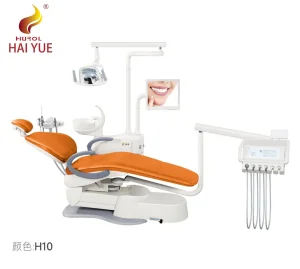
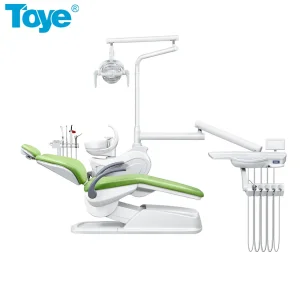
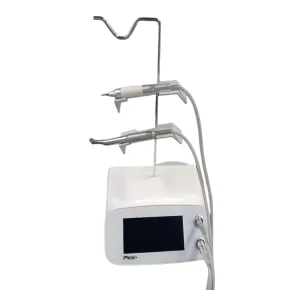
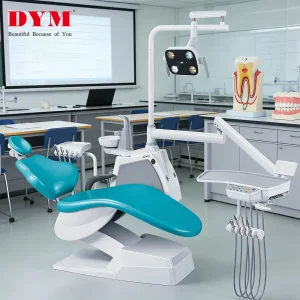
The dental industry is undergoing a critical transformation. Clinicians are moving away from modular, cable-cluttered workspaces toward sleek, integrated operatory units. Historically, scaling procedures required separate tabletop units that crowded the assistant’s cart or the delivery system, introducing separate foot pedals, power bricks, and external water line configurations. Today, the scaler built-in dental unit represents the pinnacle of streamlined clinical execution, directly integrating piezoelectric or magnetostrictive scalers into the dental chair's core pneumatic, water, and electrical frameworks.
By housing the ultrasonic engine internally, manufacturers eliminate line clutter and mitigate the risk of cross-contamination—a fundamental requirement in contemporary infection control protocols. This white paper serves to analyze the macro industry landscapes, clinical advantages, technological roadmaps, and the leading global suppliers supplying these advanced systems to ensure modern practices achieve an optimal balance of ROI, ergonomics, and patient safety.
Sealed lines and internal routing reduce aerosol pooling, matching strict global microbiological standards for operatory air and water lines.
Consolidated handpieces and foot-control systems reduce physical fatigue, protecting clinicians from occupational repetitive strain injuries (RSI).
Purchasing integrated systems reduces the maintenance overhead of individual tabletop modules, lowering long-term total cost of ownership (TCO).
The global production of dental chairs with built-in scaler configurations is concentrated in specific manufacturing hubs, each offering varying levels of clinical sophistication, customizability, and compliance certifications. As supply chains stabilize post-pandemic, global sourcing directors are prioritizing suppliers that combine advanced electronic manufacturing with robust mechanical engineering.
Key global regions dominate the sector:
The industrial positioning of modern suppliers relies heavily on the integration of secondary devices. Clinicians demand single-touch control systems, meaning the built-in scaler must communicate via CAN-bus or similar protocols directly with the main motherboard of the dental chair, displaying power levels on a centralized touch screen instead of a secondary dial.
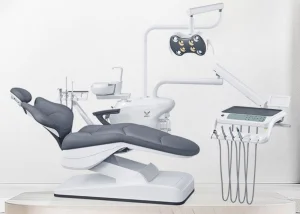
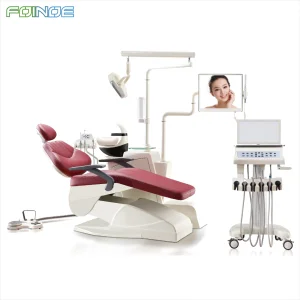
Understanding the component architecture of a scaler built-in dental unit is essential for engineering and clinical evaluation. Unlike standalone units, the integrated version relies on the dental chair’s internal master control board to route power, water, air, and pedal signals to the ultrasonic handpiece.
Modern clinical guidelines heavily favor Piezoelectric Scalers for built-in configurations. Piezo systems operate at higher frequencies (typically 28,000 to 32,000 Hz) using ceramic crystals that expand and contract. This generates linear tip motion, which is highly efficient for targeted calculus removal and generates significantly less heat than magnetostrictive units. Consequently, the patient experiences less thermal discomfort, and the system consumes less water for irrigation.
A major design vulnerability in dental chairs is the development of biofilm within internal waterlines. Premium built-in scalers feature automated water-flushing circuits and dual-reservoir systems, enabling seamless switching between municipal tap water and chemical disinfectants or saline solutions. Anti-retraction valves in the handpiece coupling prevent oral fluids from being drawn back into the delivery tubes, satisfying strict infection-mitigation protocols.
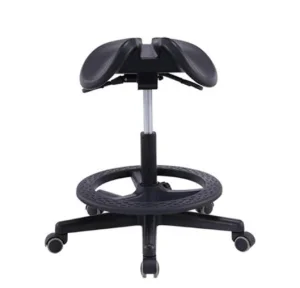
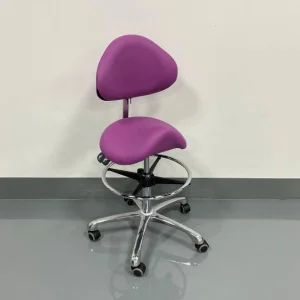
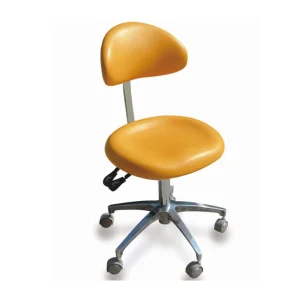
A dental chair system is incomplete without proper operator support. Prolonged scaling procedures put significant musculoskeletal strain on the practitioner. Modern operatory solutions pair integrated chairs with hydraulic saddle stools. Saddle chairs position the pelvis in a natural, upright posture, maintaining the lumbar curve and reducing the pressure on spinal discs. When configured with adjustable backrest supports, these stools allow the dentist to maintain dynamic balance close to the oral cavity, maximizing precision during scaling and micro-surgical applications.
Navigating international dental equipment procurement requires a deep understanding of localized medical device compliance. A manufacturer might offer excellent physical hardware, but without the appropriate local certifications, customs clearance and clinical deployment are impossible.
| Certification / Standard | Geographic Applicability | Core Focus Areas | Compliance Necessity |
|---|---|---|---|
| FDA 510(k) | United States | Premarket notification, biocompatibility, safety validation of materials. | Mandatory for clinical commercialization. |
| CE MDR (2017/745) | European Union | Clinical evaluation, risk assessment, post-market surveillance. | Mandatory for entry to all EU member states. |
| ISO 13485 | Global / International | Medical device quality management systems (QMS) across production. | Prerequisite for international supply partnerships. |
| IEC 60601-1-2 | Global / International | Electromagnetic compatibility and electrical safety of medical electrical systems. | Required to ensure dental chair signals do not interfere with implants. |
Beyond regulatory stamps, global buyers must assess a supplier's Local Technical Support Network. A premium dental clinic cannot afford downtime; a malfunction in an integrated scaler should not require shipping the entire chair control board back to the country of origin. Successful manufacturers partner with regional distributors who carry localized spare parts (valves, PCBs, scaling handpieces) and provide certified on-site technicians.
Not all dental settings require the same configuration. Manufacturers segment their product architectures to fit specific clinical setups, ensuring targeted ROI and functional matching.
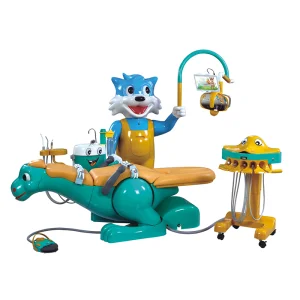
Children require friendly aesthetics and rapid scaling interventions. Colorful, non-threatening chair designs (like pediatric dental units) reduce anxiety. Integrated scalers with sub-audible frequencies allow the practitioner to complete cleaning cycles quickly, minimizing patient chair time.
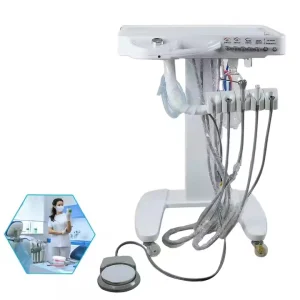
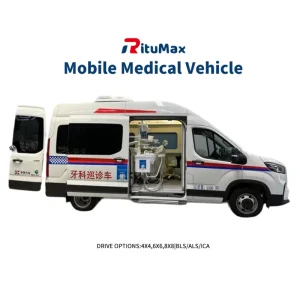
Mobile clinics (such as customized clinical oral health vehicles) require space-optimized systems. A portable delivery system with an integrated scaler, powered by an internal silent compressor, ensures comprehensive dental care can be delivered in remote regions without relying on local infrastructure.
High-end implantology clinics require multi-functional setups. Systems integrating touch screens and 2-in-1 functions (such as combining Piezo surgery engines with implant motors) allow surgeons to perform bone-cutting, sinus lifts, and implant site preparation without switching equipment.
As the dental sector embraces digital transformation, the humble dental chair is evolving into a smart, connected device. The integration of IoT (Internet of Things) and AI is shaping the future of clinical operations in several key areas:
Predictive Maintenance: Next-generation dental units utilize sensors to monitor water flow rates, air pressure stability, and ultrasonic transducer vibration cycles. Real-time diagnostic data is analyzed to alert clinic managers before a handpiece or solenoid valve fails, scheduling preventative maintenance during non-clinical hours to eliminate unexpected downtime.
Clinical Optimization: Smart chairs are beginning to integrate patient records directly with the delivery system. Upon loading a patient file, the chair adjusts to the dentist's preferred ergonomic height and configures the built-in scaler's frequency and water-mix ratio based on the patient's sensitivity history and the planned periodontal treatment. These technological strides improve treatment precision, elevate clinical workflows, and set new standards for modern oral healthcare.
Answers to critical questions regarding the integration, purchasing, and servicing of built-in scaler dental units.
Discover our comprehensive selection of high-performance dental units, utility-integrated chairs, and ergonomic dentist stools.
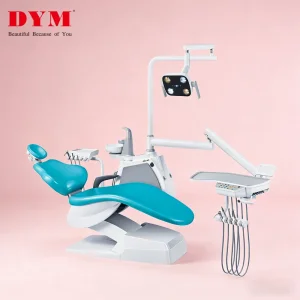
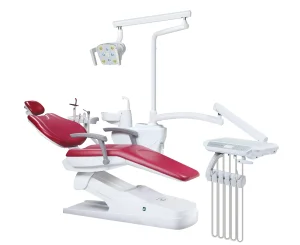
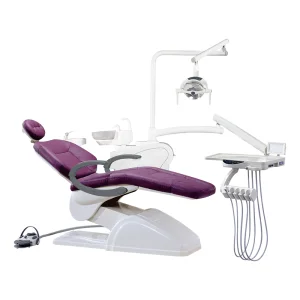
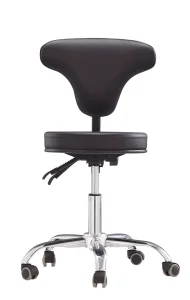
Shenzhen Derma Medical Co., Ltd. is a professional manufacturer specializing in high-quality dental equipment, with a strong focus on dental units, dental chairs, and ergonomic dental stools. With years of industry experience, the company integrates research and development, production, and global sales to deliver reliable and innovative solutions for modern dental clinics.
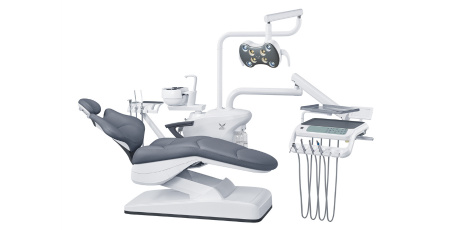
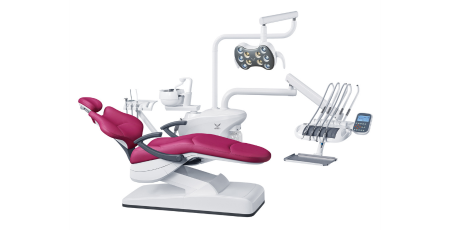
Our product range includes advanced dental chair units, portable and integrated dental systems, as well as ergonomically designed dentist and assistant stools. Each product is engineered to enhance clinical efficiency, improve patient comfort, and support the long-term health of dental professionals. By combining user-friendly design with durable materials and precise manufacturing, we ensure consistent performance and long service life.
Shenzhen Derma Medical is committed to meeting international quality standards, with strict quality control processes applied at every stage of production. We continuously invest in new technologies and product upgrades to adapt to the evolving needs of dental practices worldwide.
We provide flexible OEM and ODM services, supporting global distributors, dental clinics, and medical equipment brands with customized solutions. Guided by the principles of quality, reliability, and customer satisfaction, we strive to build long-term partnerships and deliver value-driven dental equipment to clients around the world.
 Derma Medical